


Although I just returned from a week in Ireland, and two weeks in France, we were nowhere near Paris, due to the Olympics taking over the city. While the southwest of France where we exclusively traveled on this trip was beautiful, I do wish I could get to Paris for two things: more French food and a visit to Shakespeare and Company.

Founded in 1919 by Sylvia Beach, forced to close in 1941 during WWII, and then reincarnated (in a different location) by George Whitman in 1951, it is a world-famous English-language bookstore near Notre Dame on the banks of the Seine. Some of the most famous authors EVER visited, wrote, shopped, gave readings, socialized there, and maybe slept there as well. Think Hemingway, Fitzgerald, James Joyce, Henry Miller, James Baldwin, Gertrude Stein, etc. Although I’ve been to Paris a handful of times, I’ve never actually made it to this famous institution myself.
It is frequently featured in books and movies, and I recently read two very different novels featuring Shakespeare and Company. Ruth Reichl, former food critic for the New York Times, has written quite a few memoirs and cookbooks, but eventually turned to fiction, with Delicious! published in 2014 and The Paris Novel published this year. In her most recent novel, Reichl takes us behind the scenes in Shakespeare and Company with a character who reluctantly becomes a “Tumbleweed,” the term used to describe the writers who spend some time living IN the famous bookstore. It wasn’t the first time I heard of this but I did nonetheless go down the rabbit hole and investigate it thoroughly. Can I just say the application to become a Tumbleweed is printed out and sitting on my desk as we speak? Could I possibly persuade my husband to send me off to Paris alone to live in a bookstore for one week? Hmmm….
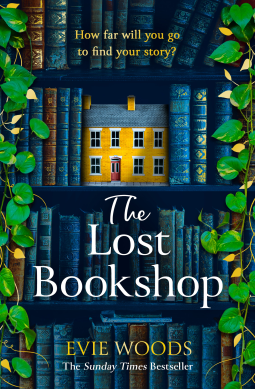
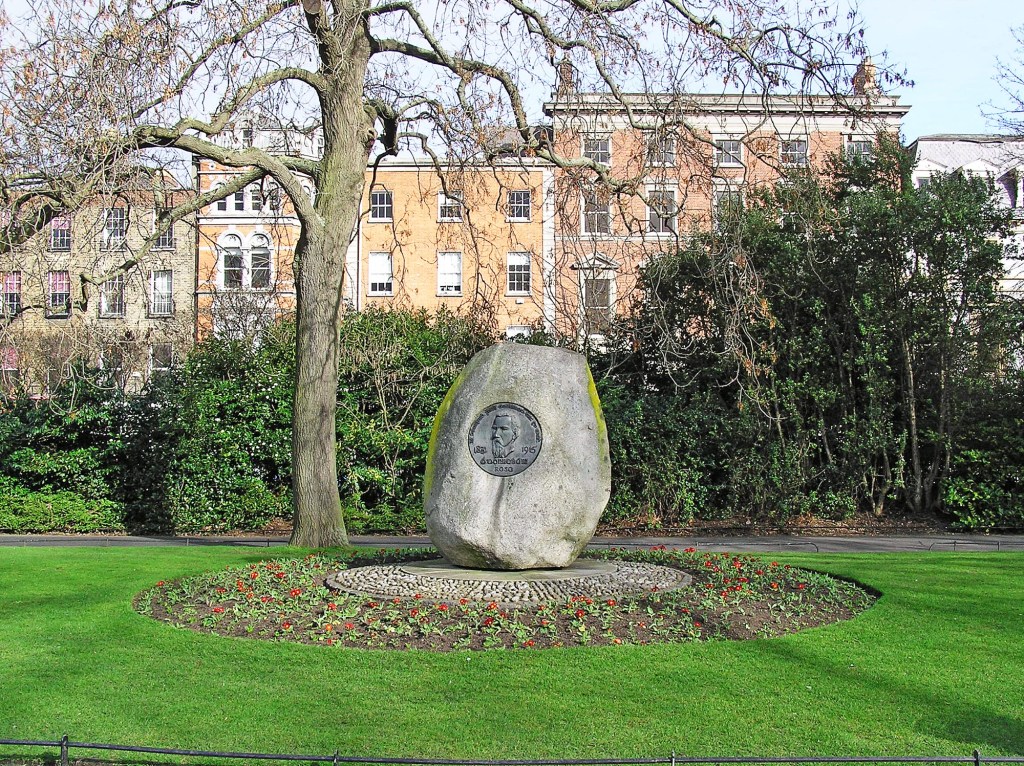
The Paris Novel was a great read to warm me up for The Lost Bookshop, published in 2023, which also features Shakespeare and Company. This is my first novel written by Evie Woods, but she is now on my list of authors to watch for and always read. I loved this book, and not just the parts about Shakespeare and Company, but also because of its other setting of Dublin, specifically the St. Stephen’s Green neighborhood, where we spent one night on our recent travels.
I loved the three main characters of this novel: Martha, Henry, and Opaline; but I also loved the minor characters as well, Madame Bowden, Martha’s mom, Henry’s landlady, Opaline’s friend Jane, and I feel I must add the bookstore itself, which I think should be classified as a character all its own.
As I continue to develop as a reader (even now in my late 60s), I find myself enjoying different kinds of books than I used to. There was a time when I didn’t enjoy dual timelines, and actually would steer clear of them if I knew the structure in advance. However, I really enjoyed this aspect of The Lost Bookshop. I also enjoyed the first person narration switching between the three main characters. With the character’s name as the title of each new chapter, it didn’t take much effort to immediately reconnect with that character as the story progressed across the two timelines. Interestingly, I also enjoyed the element of magical realism. I’m not much of a fantasy reader, and I thought I didn’t like anything magical or unreal at all, but if I am presented with bits of magic in the real world I live in, I have grown to really enjoy those stories. And this is where The Lost Bookshop really shines. Much as the tree grows in the story, so does the degree of magical realism. It is subtle and deftly written, so kudos to Evie Woods on that alone.
Some of the reviews of this book state that readers “lost” themselves in reading this book, and I would have to agree. I read each night until I couldn’t keep my eyes open, but then I couldn’t actually go to sleep as I kept thinking about the characters and how they connected. The story line of rare and antique books combined with previously unpublished work lost to the ages and then found, well, it was all so intriguing. Evie Woods is a VERY good storyteller.
I do feel obligated, though, to mention that some aspects of this book were difficult to read, and for some readers there may be painful triggers. This book contains domestic abuse and is quite descriptive as to the physical effects of it, but even more painful is the mental effects, which lingered for so long with the main character. It touches on parent abandonment which I thankfully have also never experienced. It also contains institutional abuse and neglect, and that was so very painful to read. Please bear that in mind if these are things that will distress you when reading.
However, I found the writing of this novel so beautiful, almost like poetry, or that of a very old fairy tale. One of the characters, Madame Bowden, who could be said to represent the fairy godmother in this tale, says to Martha, “Some things are meant to be flawed. Therein lies the beauty.” Madame Bowden in her words and actions throughout Martha’s storyline really makes the story so inspiring and uplifting, even considering the darkness brought on by Martha’s family life and the events that nearly end it all for Opaline. It is one of the reasons why I loved this book so much. It is truly a beautiful book about the love of books and the power of words.
Thank you to NetGalley and Harper 360 for this ARC.


 Michelle Blanchard Ardillo
Comment here!