


First of all, thank you to NetGalley and Random House (an imprint of Penguin Random House) for the ARC ebook of Elizabeth Strout’s newest book, The Things We Never Say (May 5, 2026, 224 pages). I lobbied hard for an ARC, and thankfully, the literature gods heard my cry, or at least someone at Random House did!
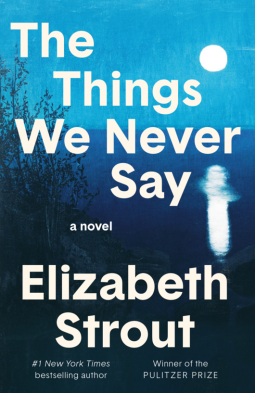
Next, I want to thank Elizabeth Strout (no…this isn’t a speech I have ready in case I ever win an Academy Award, lol). As they say, I would read her grocery list if it were possible to get my hands on it. Since November of 2020, after reading Olive Kitteridge for the first time, my first ever Strout masterpiece, I have lived in the Strout Universe, waiting patiently for each new book as she types “the end” and emails it to her editor. Ms. Strout, you made me a better reader, a better writer, and a better person, as I try so hard to see the good in people, even the people that aren’t so easy to get along with, the people with valid reasons for me not to like them, the people in the margins we try to look past. If the novel I am working on ever sees itself on a shelf in a library or a bookstore, it will be you, Ms. Strout, to whom I will say thank you first. Reading Olive Kitteridge made me rethink the novel I had been working on for so long, and finally, I could see the pieces start to fall into place.
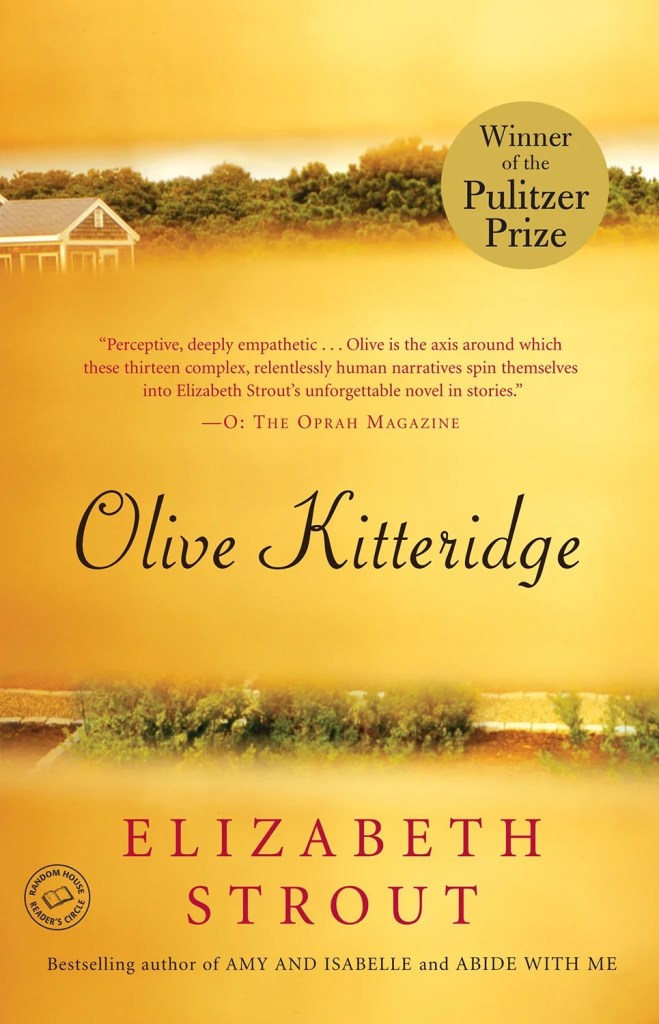
Finally, a review of this book, The Things We Never Say. This book…this book. I have to be careful because of spoilers, but this book is hard. It’s tough. It’s sad. It’s funny. It’s depressing. It’s political. It’s uplifting. It’s everything all at once, and it isn’t really about anything—more of a culmination of a lot of little (and not so little) things. But above all, it’s filled with silence. Thus, the title. The Things We Never Say.
We all have our secrets. Our secret thoughts. Our secret fears. Our secret likes and dislikes. We think we are a blank page, the perfect poker face, the “I’m fine” on the outside while slowly (and silently) crumbling on the inside. There’s a lot of that in this book. A lot of secrets. A lot from the past that has been buried. Not just with one or two characters, but virtually every single one of them.
And speaking of characters, Strout leaves Maine and her well-known cast of characters from the Olive series to take us to Massachusetts Bay. We meet school teacher Artie, his wife Evie, his son Rob, his friends, his students, his sailboat, and we forget—momentarily that is—about Olive and the crew from Maine.
As a retired middle school teacher, I feel Artie, the main character, in the deepest part of my soul. For almost 20 years, I spent my days with 7th and 8th graders, students just one or two years younger than Artie’s high school history class students. The smart ones. The lazy ones. The cheaters. The lost ones. The bullies. The bullied.
I, too, just like Artie, have a box of notes that students have written to me over the years. Mine don’t all fit in a small jewelry box like Artie’s, but that’s not because I received more than Artie. It’s because I think he was more selective than me. I get very emotional when I look through that box. Sure, it’s an ego boost of massive proportions, hearing “You are the best teacher I ever had.” But, it’s really because I feel it, I know it in my heart of hearts, that I made a difference in someone’s life. Occasionally, I am reminded of that in real time.
Recently, I attended a funeral where I only briefly knew the deceased, but I knew or had worked with (in my first career as a paralegal) at nearly half of her 13 children. I also taught (in my second career) two of her grandchildren.
I had gone to this funeral alone, and as I stood at the back of the church, I scanned the packed building for someone I might know to sit with. And then, I saw her, standing in the center aisle. Tall, close to six feet, beautiful and poised, long shining dark hair. I walked over to her and said, “Do you remember your old English teacher?” She instantly threw her arms around me, and then stepped back and said, “Cascade of brown waters!” She then grabbed the handsome young man standing next to her (also very, very tall), and said, “This is Mrs. Ardillo, the one I told you about, my favorite teacher ever, you know, the one who taught me ‘cascade of brown waters’ which I say all the time!”
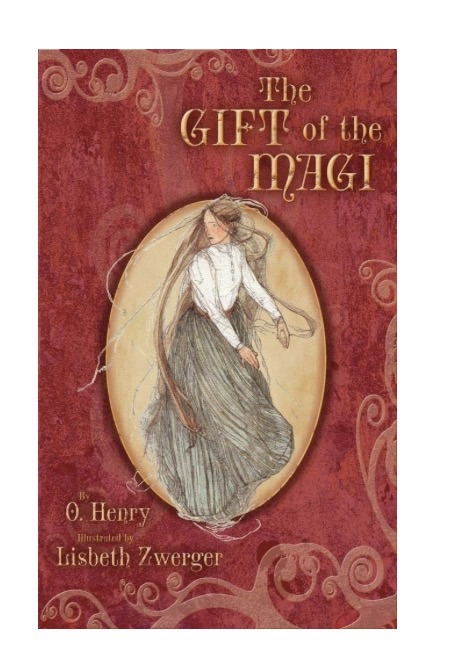
It took me a moment, just a moment, to place it, but it all came flooding back: 8th-grade literature class, just before Christmas break each year, the last piece in my O. Henry unit, where I focused on irony and imagery. In “The Gift of the Magi,” O. Henry paints a picture of Della for us with his words:
“So now Della’s beautiful hair fell about her rippling and shining like a cascade of brown waters. It reached below her knee and made itself almost a garment for her. And then she did it up again nervously and quickly. Once she faltered for a minute and stood still while a tear or two splashed on the worn red carpet.”
So you see, that is why I can fully identify with Artie. But it is there that the similarity ends. I am not Artie. I am not carrying the silent pain that engulfs him. I am not Artie, except for being a teacher that some students will remember long after they’ve left my literature classroom.
I wanted to reach into the pages of this book and give him a hug—maybe a good shake, too, tell him to keep the faith, urge him to share his secrets, push him to talk to someone—really talk—to get through what he is struggling with. Some of these secrets, these things he will never say, will follow him to his grave someday. And, so it is with many of the characters in this book, oh, the burdens these people carry within themselves.
When I was studying to take the Praxis to become certified to teach, I had to read a slew of books frequently taught in 9th-grade English classrooms. One of them was The Things They Carried by Tim O’Brien. I remember sobbing when I read that book. It is fiction, but it hits home like nonfiction, about Vietnam War soldiers and what they carry with them during the war, both material objects, but also memories. If you haven’t read it, I highly recommend it. As I was reading this Strout book, I kept thinking about O’Brien’s book and the tangible and intangible things we all carry around, much of it inside of us.
Without giving away too many spoilers, years back, Artie and his wife Evie experienced a tragedy involving their son, their only child, Rob. That tragedy changed both of them, understandably. It pushed Artie further into himself, and it pushed Evie further out of herself. It changed each of them individually, but it also changed them as a couple. Strout handles this all with a deft hand, releasing bits and pieces at the perfect pace to fully understand this couple and what they have been through, what they carried inside, what they would never say.
As with other Strout books, I noticed a little thing that made me smile each time it reoccurred in the book. Olive had a way of waiving her hand, as though she were dismissing you or a thought she had. In this book, whenever someone thanked Artie for something, his response was always, “You’re welcome. You’re entirely welcome.” It’s a small thing, but it just makes that character more real to the reader.
Strout also drops a little Easter egg (’tis the season, after all) for her devoted readers to find. In Chapter 1, she writes:
“He remembered that his wife had loved some book—oh, years ago now—about a crotchety old woman from Maine, and he had read the book reluctantly only because his wife had liked it.”
For me, Strout’s prose is like poetry. Poetry comes in all forms, some short and sparse, others flowing and lyrical. Strout’s writing just sings to me. It is why she is one of my favorite authors of all time.
At one point, Artie is having lunch with another teacher, and she tells him about a student’s comment in her English class and says,
“I love Danny. He’s always been unbelievably sharp about Shakespeare, but that just astonished me.”
Strout drops the reference to Shakespeare into her story and then follows up with (here I’ve redacted parts that give too much away),
“Artie nodded while he chewed. He did not tell her how … A haze of puzzlement overcame him; he would have told her about that in the past—in a heartbeat, he would have told her. But he did not tell her. He put his sandwich down. And it came to him then: He had been taken away from his old world…he had somehow slipped the ties of the world that had been his for almost thirty years.”
In one smooth paragraph Strout talks of Shakespeare and then tosses in the reminder of a partial quote from the poem “High Flight” by John Gillespie Magee, Jr. that President Ronald Reagan quoted when speaking to the country about the Challenger disaster. All the while I am reading Strout’s latest book alongside the real life coverage of the Artemis II mission. A magical connection to a time when well-read world leaders relied on references to the classics, poetry, and the fine arts to express the feelings of a nation.

As always, I am sad when I finish a Strout book, sad that it’s over, sad that I couldn’t slow down to make it last longer, sad that I’ll have a long wait for the next one. I loved this book, even the hard parts, even the heavy dose of politics, even the different kinds of pain the characters carried inside of them. And, I am always thankful that there are really great writers producing really great books that cause me to think and feel and cry and laugh and learn. This is one of them.
 Michelle Blanchard Ardillo
Comment here!