


The 2010 movie The Social Network details Mark Zuckerberg’s digital creation of Facesmash. Initially created out of spite after a failed date, it was an online directory of female students at Harvard where students could rate the girls’ attractiveness. Out of that misogynistic idea came Facebook, or TheFacebook as it was originally called. Today, Facebook is second string to more trendy social media platforms like Instagram, YouTube, and TikTok, but Facebook remains a social media platform where people (perhaps older generations) can reach out and connect with past and present friends.

Social media, as everyone breathing on this planet knows, is fraught with issues. Young people today often find their mental health status tied to the number of “likes” they receive on a post, or whether a video goes “viral.” A funny cat video or a heartfelt video of a toddler’s first taste of say, kiwi for instance, will sometimes push a previously unknown social media user into influencer status, which is where the money starts rolling in. YouTube is full of videos of people who only do one thing: they purchase (or are gifted from the company as a PR tool) an item and “unbox” it on camera. I myself know of a young woman who purchased her own home and has no “day job,” living solely off of her income from the YouTube and TikTok videos she posts of crochet projects, tutorials, and patterns. Needless to say, it is a whole new world out there.

So you can imagine my surprise when our very newly ordained parochial vicar’s homily at the vigil Mass last Saturday evening began with the words, “You may not be familiar with a new term being used these days, para-social.” He went on to explain exactly what para-social means.

By way of example, Fr. Marco said that he listens to a podcast featuring a Catholic priest, and through these podcast episodes has come to feel as though he knows that priest personally. He has listened to the priest’s anecdotes and stories, and knows of his life as a parish priest and his own family life. So, when he had the opportunity to actually meet this podcasting priest in person, he felt somewhat awkward, because here was a person he was meeting for the very first time, but here also was a person who he felt like he knew very well. And, conversely, this podcasting priest did not know Fr. Marco at all, had never heard of him, knowing nothing of his family life or priestly vocation.
Although I had never heard the term para-social before, I immediately knew what it meant and could put it into context in my own life. Other than my family and my faith, my other two passions in life are food and books. Eating and reading, not exactly two activities that will keep you fit and healthy, lol.
I love to cook, try new recipes, eat out at new restaurants, experience new cultures and traditions through foods of other cuisines, and I read cookbooks like novels. Likewise, I love to read, I love to talk about books, read about books, and I will read just about anything from any genre except horror and psychological thrillers. One of my favorite places in the whole world is my local public library.
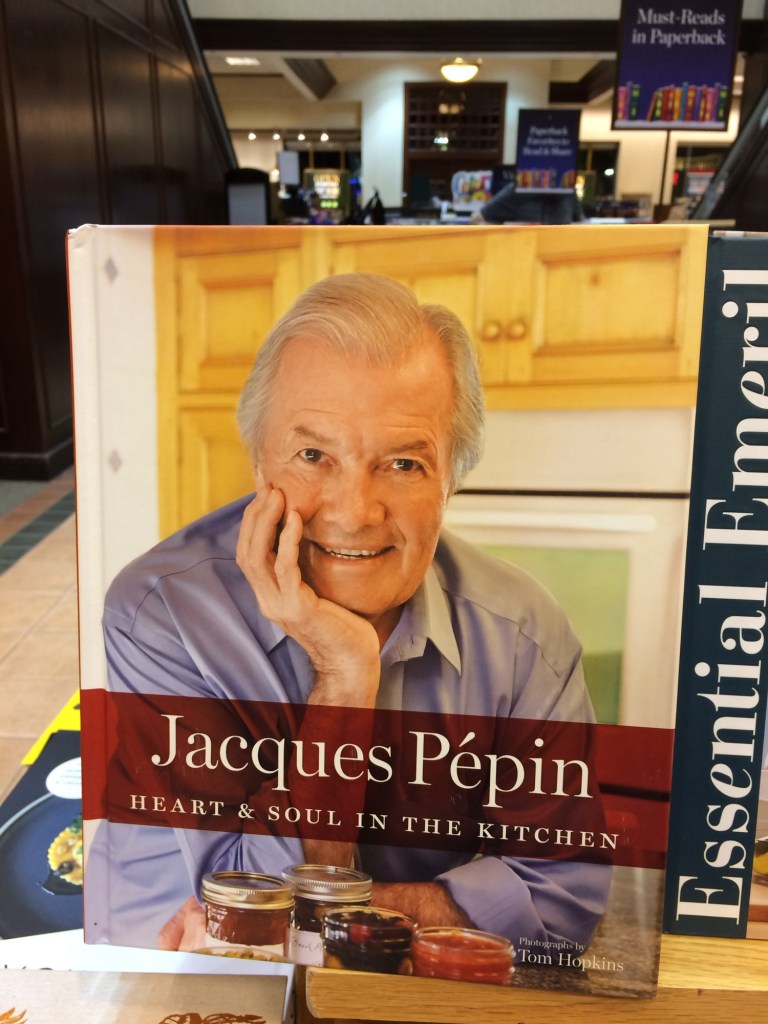
My social media accounts (yes, I am only human and love social media) are filled with posts from famous chefs and famous authors. Many years ago, I brought my two daughters (very young at the time) with me to a book signing where Jacques Pepin, the legendary French chef, held court. He took time with us, talked to the two girls, posed for a photo with them, and humored me as I faultily tried to explain to him how much his books and cooking shows meant to me. I showed him the book I had brought for him to sign, multiple pages stained and grease-splattered (especially the cumin rice recipe) from years of use.
In the book world there is a term for a person who has read everything ever written by a particular author: a completist. When I read something I really like, I dive in, feet first, and read everything by that author. Most of the time, I find that I like everything they write to the same degree. It is that person’s unique writing style that I connect with, his or her storytelling ability that I love. Right now, I have a handful of authors that fall into this category: AJ Pearce, Kirstin Chen, Elizabeth Strout, and Elinor Lipman.
A few years ago, when Kirstin Chen’s third novel Counterfeit was finally released, she did a book talk and signing at a DC bookstore. I cleared my calendar for that evening, and even though I taught a full day of middle school language arts, I made it to the bookstore quite early to ensure I had a good seat. I was so early the place was empty so I went downstairs to the little shop for a pastry and a cup of coffee. I finished up and returned to the room to find it PACKED with people. In a complete panic I weaved in and out of the crowd searching for a seat, when all of a sudden I heard, “Michelle, is that you?” Yes, believe it or not, it was Kirstin Chen herself, smiling ear to ear, recognizing me from numerous times I had commented on her social media posts. She waved me over, hugged me, and sat me down on the first row — next to her very own husband!!! I was completely speechless (rare for me, I know) and babbled something like “….uhuhImjustsohappytomeetyouinpersonuhuh…” in barely intelligible English.
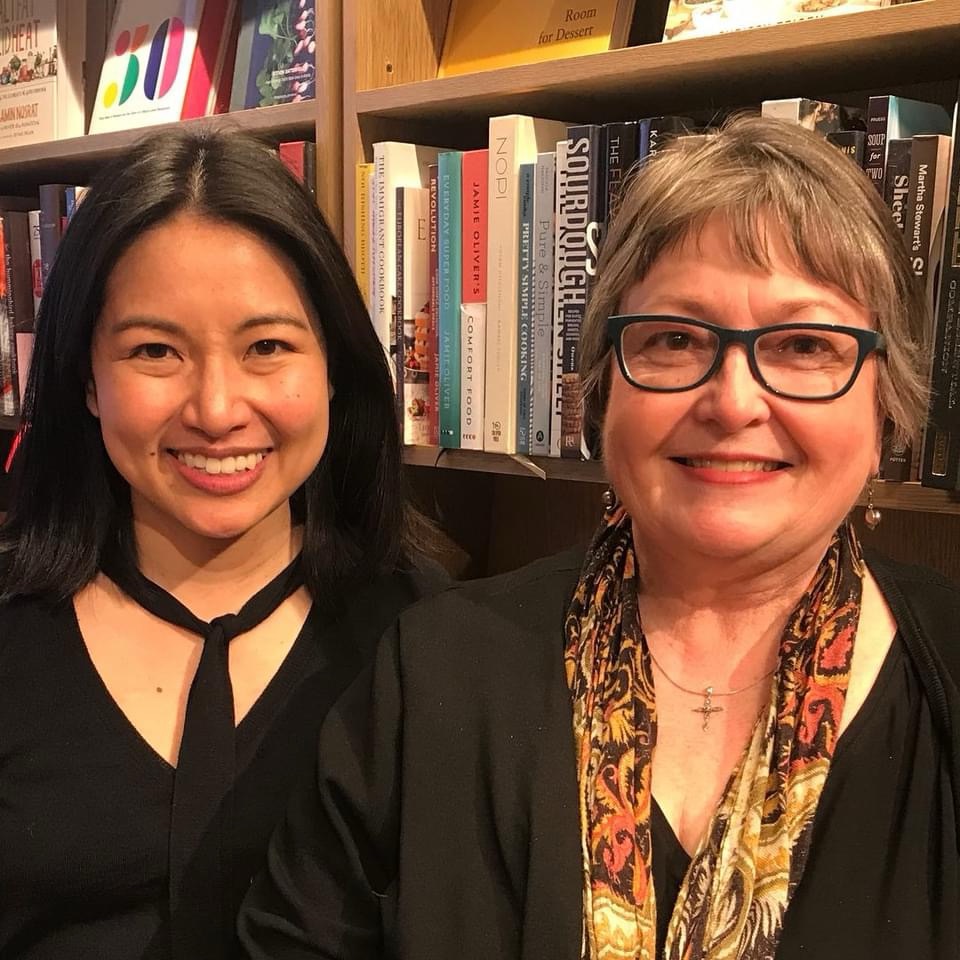
Does Kirstin Chen know me? Absolutely not. Do I really know her? Of course not, but I love her books, and through social media I know what kind of food she likes and places she likes to travel to. I was thrilled to meet her in person and have her sign my copy, but this is a perfect example of the term para-social that Fr. Marco was explaining in his homily.
At this point, you are probably wondering what any of this has to do with the homily of a Catholic priest at a Mass after the reading of the Gospel of Luke, Chapter 11, Verses 1-13? Well, it all fit together perfectly. Fr. Marco talked about having a real relationship with God, with our Lord. Does He know us? Yes, of course, He created us, but do we have a real relationship with Him?
The Gospel begins with the story of a man who goes to a friend’s house at midnight and asks for three loaves of bread for he has a visitor and nothing to offer him. But the friend is in bed for the night and doesn’t want to be disturbed. This man will not go away, though, and he continues to knock and plead to borrow three loaves of bread. Luke tells us that if the man does not get up to give him the bread because of friendship, he will surely get up to give him the bread because of his persistence.
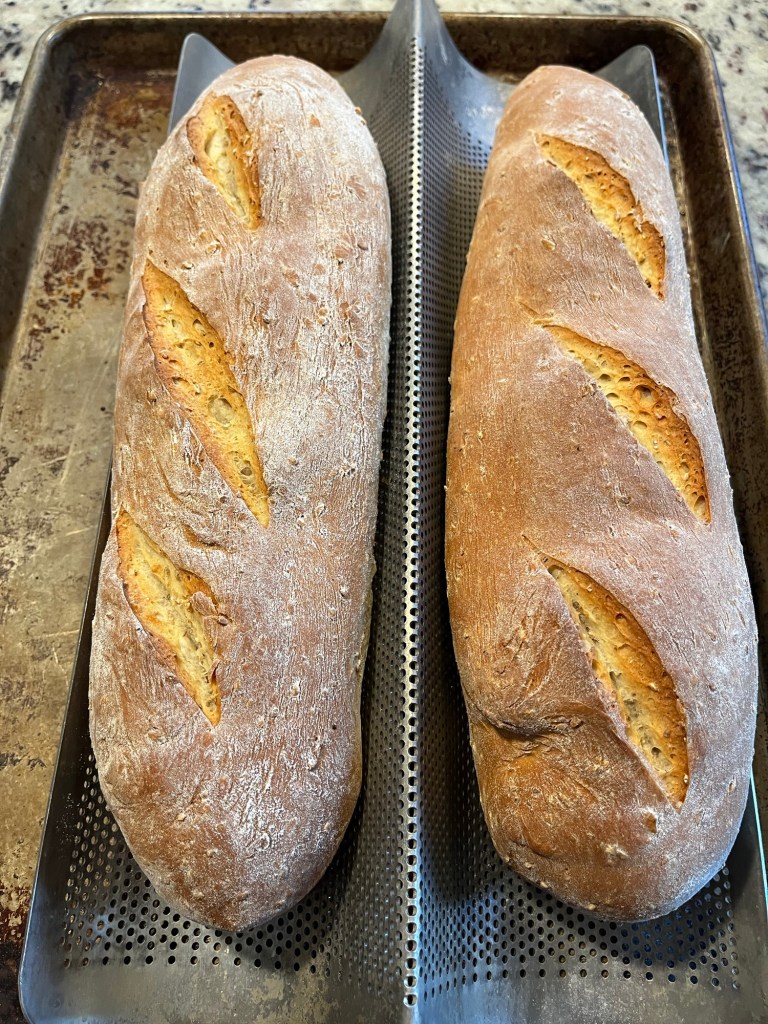
Luke goes on to say, “ask and you will receive; seek and you will find; knock and the door will be opened to you.” Fr. Marco pointed out that we must be persistent in our quest for a real relationship with the Lord, not a para-social relationship. And, we can’t just go to the Lord when we are in need, of bread or anything more serious. We must go to the Lord often, frequently, persistently, so that He knows our voice, so that He knows us intimately, so that when we do go to Him with a heavier burden, He will be there, knowing us by our voice, as the shepherd knows each of his sheep.
I’ve been blessed in my faith journey to have had many wonderful priests as the shepherd of the Catholic parishes I have belonged to in Louisiana, in Belgium, in Maryland. One of my most favorite priests, the late Monsignor Oliver McGready, had a saying that he used frequently in his homilies. Instead of paying it forward, “pray it forward.” Pray in good times, pray when you have all you need, pray when your burden is light, so that when your burden is heavier, the Lord will know that you have prayed it forward. He will be there waiting for us. He will know our voice. He will reach out and comfort us. He will say, “Come to me, all who labor and are heavy burdened, for I will give you rest.”


Comment here!