


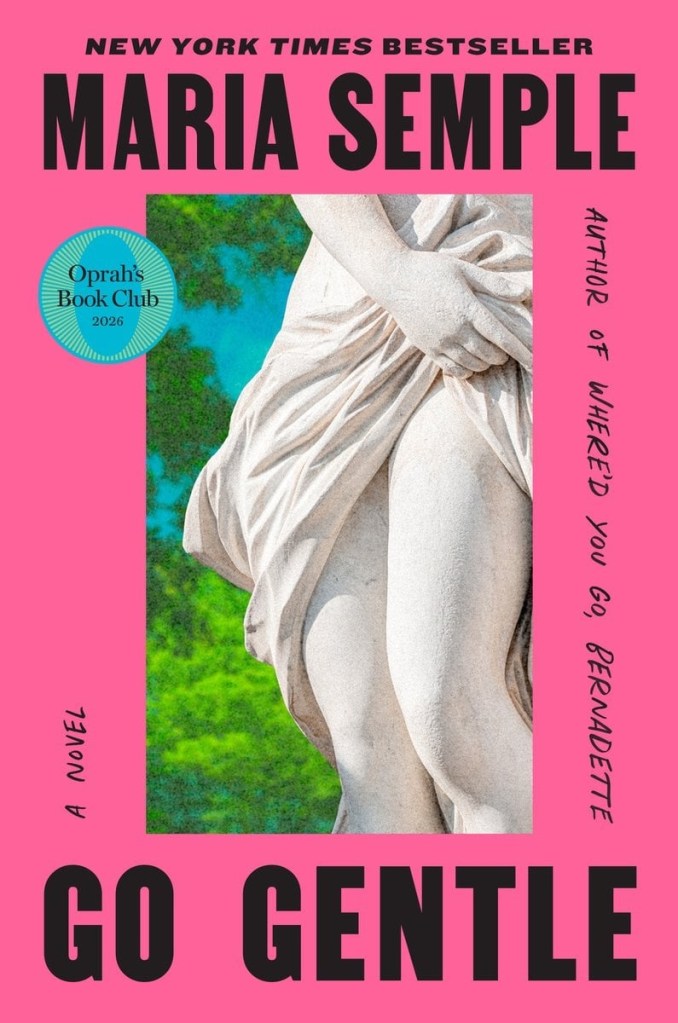
First of all, thank you to Goodreads and the publisher, G. P. Putnam & Sons, for the hardback copy of this book, complete with the beautiful dust-jacket color photo of what appears to be the Venus de Milo, a stunning piece of art on display in the Louvre in Paris. Be careful, though, in this burgeoning age of AI, we all should realize that first glances can be misleading.
Books can be misleading as well. What starts out as a piece of contemporary fiction—filled with millennial and pop culture references—with a straightforward story about a young woman trying to make it big in Hollywood, can about half-way through (roughly pages 1-153 out of 384 pages) make a sharp turn and change into an intriguing mystery spiced up (and I mean spicy) with a mid-life romance. 🔥🔥🔥🔥🔥
I must be honest, I was not crazy about those first 153 pages. In fact, I think this book should have a few trigger warnings on the cover. I usually don’t do anything close to a spoiler in my book reviews but I am going to be very clear about this one point in Go Gentle. There is an attempted suicide in this book, and it is described in very graphic detail. I think that readers who struggle with suicidal ideation should know this before picking up this book. It is referenced several times throughout the story, never as graphic as the first time it is described, but it is there. This story is about a person who has a life-crushing event and makes the decision to just end it all to escape the fallout from this event. She is not successful, and in the end, she recovers and comes out on the other side in a much better place.
I really enjoyed the book much more after the main character, Adora Hazzard, decides to go to graduate school and become a philosopher. She marries and has a child and enjoys keeping house, although the shine is soon off the apple as things sometimes go. Through a combination of hard work and good luck, she lands a once-in-a-lifetime opportunity to work for an extremely wealthy couple, helping the husband through some difficult times as only a philosopher can do, while guiding their twin teenagers through teenaged angst.
However, things start to heat up. A chance meeting with a well-dressed, well-to-do gentleman at the ballet leads to some pretty spicy hotel room scenes and it becomes evident that perhaps it wasn’t such a chance meeting at all.
Here’s where the wheels came off the bus for me. There is a lot going on. There’s her relationship with her daughter, a teenager splitting her time between mom and dad who has moved on, remarried with new daughter. There’s the members of Adora’s “coven,” i.e. the two ladies who live on her floor and with whom she splits all sorts of things three ways like loaves of bread, a cleaning person, a seamstress, a dog walker, a car and its parking space, and more. There’s Adora’s mom, who actually deserves a book of her own and who reminded me quite a bit of Daphne from Clare Pooley’s How to Age Disgracefully. Add to all of that the secret romance with Digby. Then, there’s the whole subplot involving the Venus de Milo. I’m still a tiny bit confused as to the sequence of events near the end of the book.
Is this book well-written? Yes! Is it compelling? Yes, although as I said there is a lot going on. In several reviews on Goodreads a similar sentiment was expressed. One reviewer said that it was like the writer had four ideas for a novel and couldn’t decide so she put them all into this one.
Of the people who expressed this, most agreed that the plot line about Adora’s unique living arrangements with her “coven,” was the one that they all wanted to read more about, and I agree. Adora and her two neighbors Emily Ann and Minna have worked out this ingenious financial agreement to each live their best lives by pooling and sharing resources for things that would be out of reach for any one of them individually. What a fascinating concept. One season ticket to the Met? Way too much for a single mom but sharing the expense three ways and taking turns attending makes it completely workable.
I also would have loved an entire plot on the part of the novel dealing with the Venus de Milo and international terrorists out to repatriate stolen works of art.
And so, I am very conflicted about rating this book. I absolutely loved her previous novel, Where You’d Go, Bernadette, which I rated ⭐⭐⭐⭐⭐.
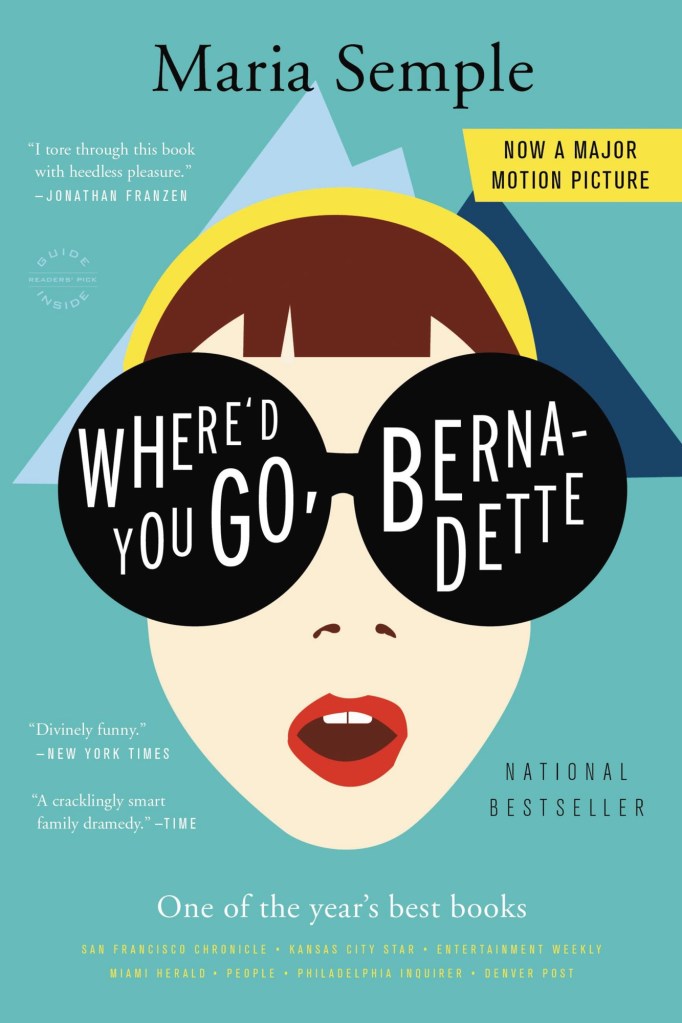
I will continue following Maria Semple’s writing career, but this one just didn’t come together for me quite the same way.


Comment here!