


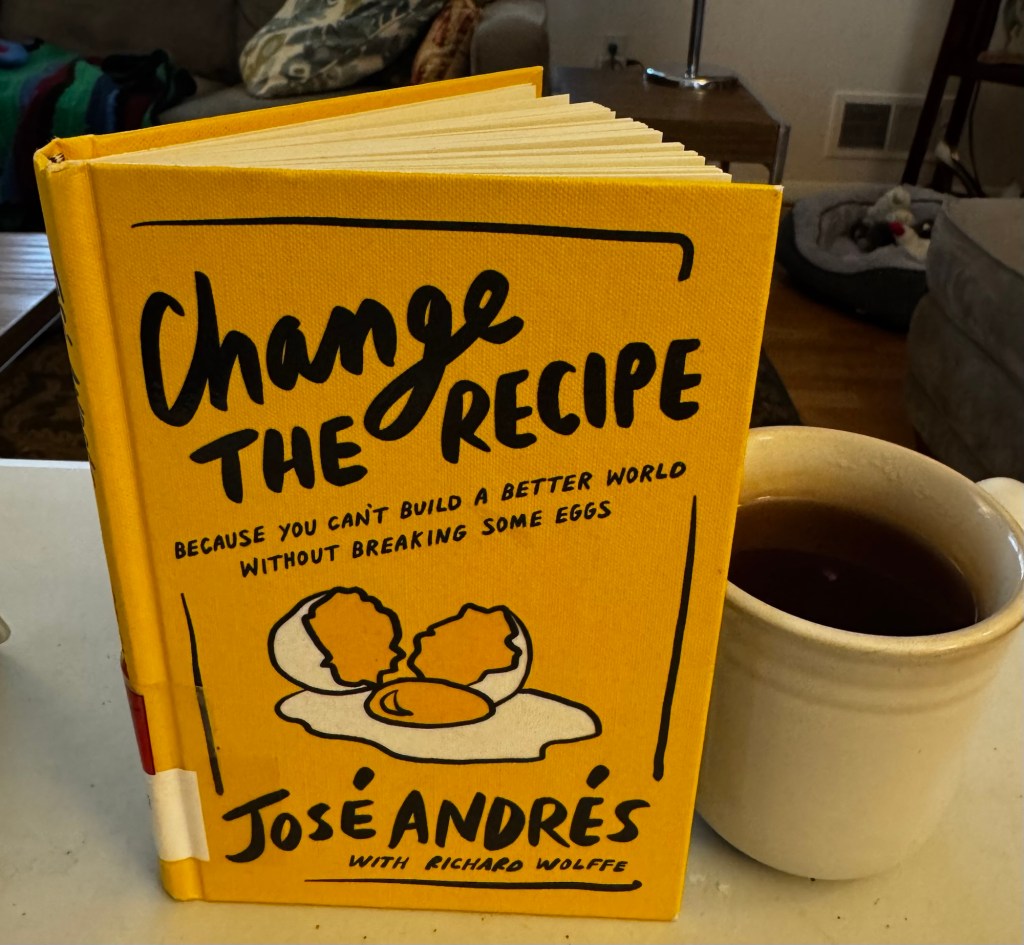
“It’s better to ask for forgiveness than permission” is a saying that could be the theme of José Andrés’s latest book, Change the Recipe: Because You Can’t Build a Better World Without Breaking Some Eggs (Ecco Hardcover, April 22, 2025, 195 pages), written with Richard Wolffe. That saying is often attributed to the late Rear Admiral Grace Hopper, who is sometimes called the mother of COBOL, the computer language which is widely used in data processing. To say that José Andrés and Grace Hopper had a similar thread running through their personalities is somewhat of an understatement.
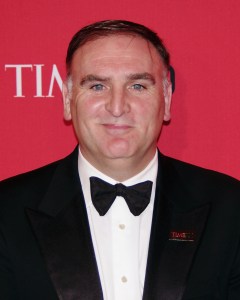
This short memoir is a collection of very short essays interweaving Andrés’s career as a chef and as a humanitarian with his personal life story and the lessons he has learned from family, mentors, and work experiences. As the title indicates, he relates everything to food, and in this book, he connects the need to change how the world addresses natural disasters and corporate influence over the decisions required to get aid to the most disadvantaged by such disasters. He definitely falls into the “action first, ask later” category.
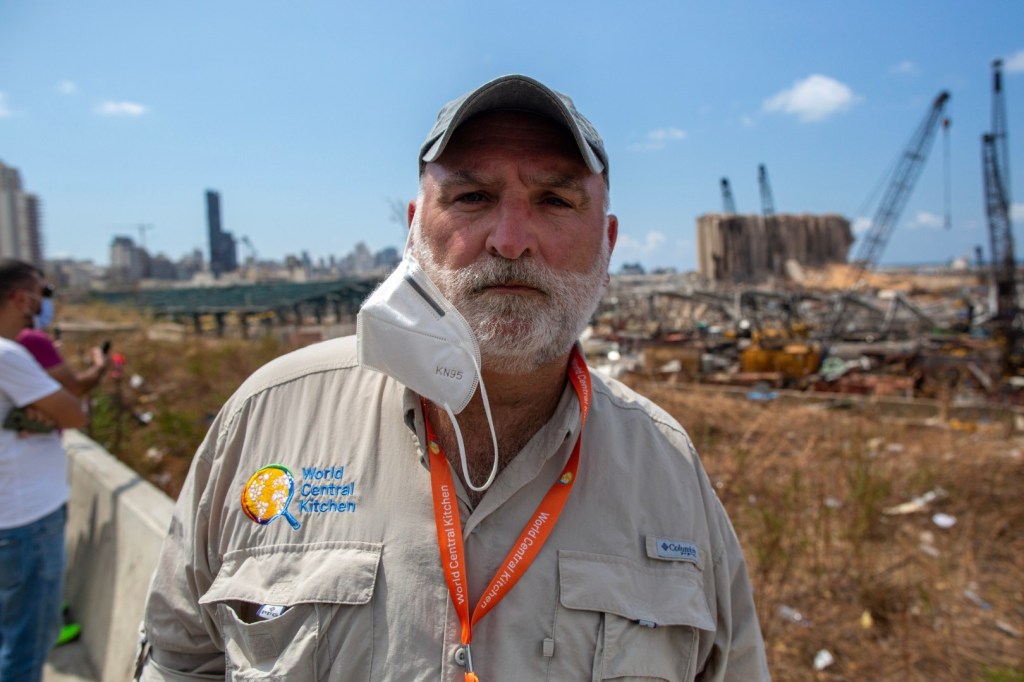
While not a political treatise, he does write about the war between Israel and Hamas as well as the war between Ukraine and Russia. His organization, World Central Kitchen, has “boots on the ground” as he puts it in those places, as well as in Lebanon, Brazil, Chile, Haiti, Madagascar, and other locations as and when the need arises to serve food and water to the masses.
In one particularly touching essay titled “You Really Don’t Know Everything,” he writes about setting out to make beans and rice for the people in Haiti following the huge earthquake of 2010, knowing that he makes “the best beans and rice in the world” as he jokes, but the Haitian women he is cooking with use sign language (he speaks Spanish, English, and some French, none of which helped him communicate with them in their Kreyòl/Haitian Creole) to show him that, while they appreciated what he was doing, the beans he was cooking was not the way they liked to eat them. He learns through this experience to give the people what they want, to use local, seasonal produce prepared by the local cooks who make the dishes they know best.
At the end of the book, there is a small section called “Change Your Recipes: for the young and hungry at heart.” Among these is Andrés’s own recipe for the one-serving microwave omelet, which is somewhat of an online viral sensation. Also there is the text of the World Central Kitchen Memorial Speech he gave following the deaths of 7 WCK employees who were killed by an Israeli drone strike after they had made a food delivery in Gaza.
I’m not sure what or how much Richard Wolffe contributed to this book. He is an accomplished journalist and published author, having written a three-volume series on President Obama and more.
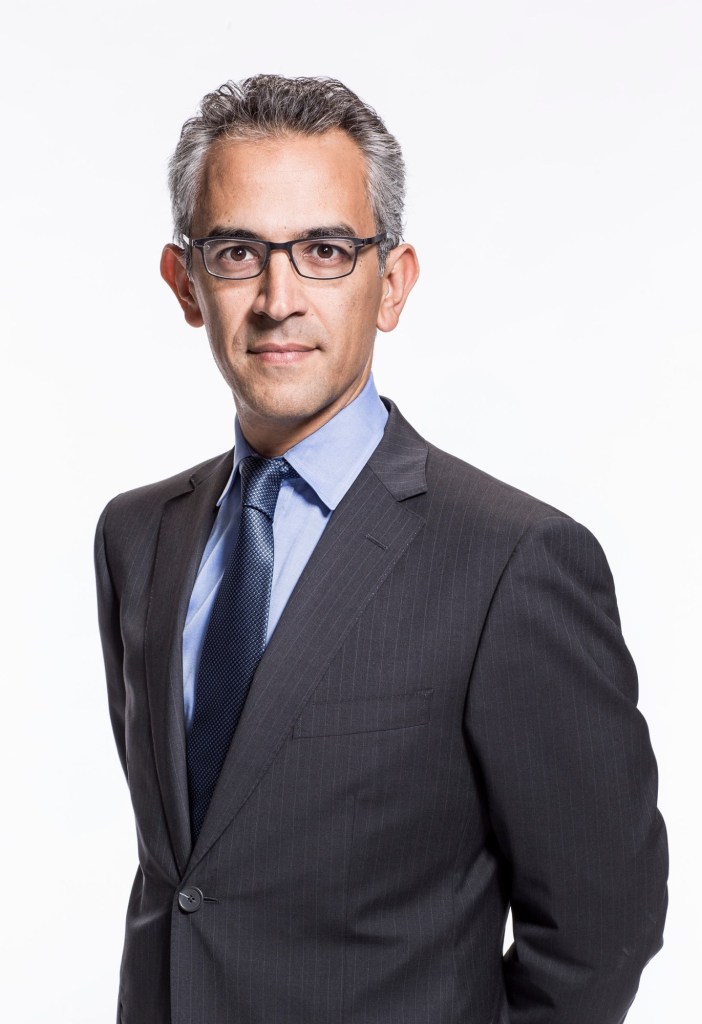
He also co-wrote the life story of Luis Miranda, father of superstar Lin-Manuel Miranda, and he has co-authored with Andrés several cookbooks. He and Andrés were (are?) neighbors and cook together frequently, so he knows Andrés’s voice as well as his own. But this book sounds like Andrés.
How do I know this? In my first career as a real estate paralegal and lease negotiator, I was part of the landlord’s team to negotiate and finalize the lease of space to Andrés for his second Jaleo location in Bethesda, Maryland, back in 2001.
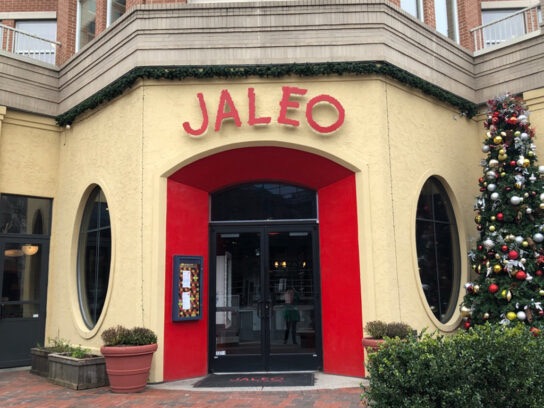
One of the hangups for completing the deal was a clause in the lease agreement assigning responsibility for the maintenance of the restaurant’s grease traps. Typically, the responsibility for the periodic cleaning of the grease traps is the tenant’s responsibility, but Andrés and his team strongly felt that the landlord should take that on as the grease traps were on the roof, so technically on the exterior of the tenant’s premises.
We finally had to have a face-to-face meeting to discuss and further negotiate this one remaining point. José Andrés and his lawyer were polite and professional but held their ground, until I said, “Mr. Andrés, whose grease is in those traps?” He turned to his attorney and said, “We will maintain the grease traps.”
A few months later, I received an invitation to the Bethesda Jaleo’s soft opening with a handwritten note from Andrés himself. My husband and I thoroughly enjoyed ourselves, where we were greeted by Andrés himself and instructed “to order anything and everything we liked!”
During the pandemic, Jaleo closed and was replaced by Andrés’s Spanish Diner, also a huge success.
I enjoyed reading this book. Andrés has demonstrated his culinary skills through his restaurant success, his television programs, and his many cookbooks, but perhaps more significantly, he has proven his mettle in his work to feed the world, or as he refers several times to John Steinbeck’s famous line from The Grapes of Wrath, “Wherever there’s a fight so hungry people can eat, I’ll be there.”
 Michelle Blanchard Ardillo
Comment here!